
The Magic of Normandy: Why One Visit is Never Enough
Normandy, one of France’s most visited regions outside of Paris, still retains its country charm and unhurried ways. It consists of dramatic coastlines with serene beaches, a verdant interior, wild river valleys, picture-book villages and of course one of the true wonders of the medieval world: Mont-Saint-Michel. It offers travelers a chance to indulge in fine local food and drink, visit historical sites, landscapes that inspired impressionist artists, as well as visit some of the most important historical sites of World War II.
It would be hard to visit Normandy without noticing the numerous monuments and museums dedicated to WWII and the D-Day Landings. There are enough to plan an entire multi-day itinerary around these alone. Most American travelers like to dedicate one or two days visiting the landing beaches (Utah and Omaha Beaches) and the very moving American Cemeteries in Colleyville-sur-Mer or Saint-James. To maximize the experience, there is the option of hiring a local, licensed historian-guide who can offer private tours to these and many other sites relating to the battles of Normandy.
Our Magic Europe team will help you create the perfect itinerary to begin your Normandy adventure which will leave you excited to return to discover each and every corner of this unspoiled landscape. To walk in the footsteps of the soldiers but also the locals who lived through the occupation and invasion, is quite a unique opportunity.
Wars have been fought in Normandy for centuries. The famous battle of Hastings, another famous battle waged over a thousand years ago that still intrigues us to this day, happened between the Normans and the English in 1066 and left many historical fingerprints across the landscape. The battle (and its outcome) have been memorialized in the famous Bayeux Tapestry and housed in an impressive museum which is currently being renovated and is closed to the public until 2027.
No matter, a visit to Bayeux is still recommended for the charming historical quarter as well as for viewing the interior of Bayeux Cathedral, where the tapestry reportedly hung on display for all to see. It was an especially helpful visual aid…a pictorial accounting of the events leading up to the battle as well as the aftermath. There is a very well-marked tourist trail through the city which highlights the most interesting sights. After you’ve worked up an appetite, there are countless delicious restaurants specializing in local ingredients, from simple but delicious crepes to casual bistros, to sophisticated fine dining.
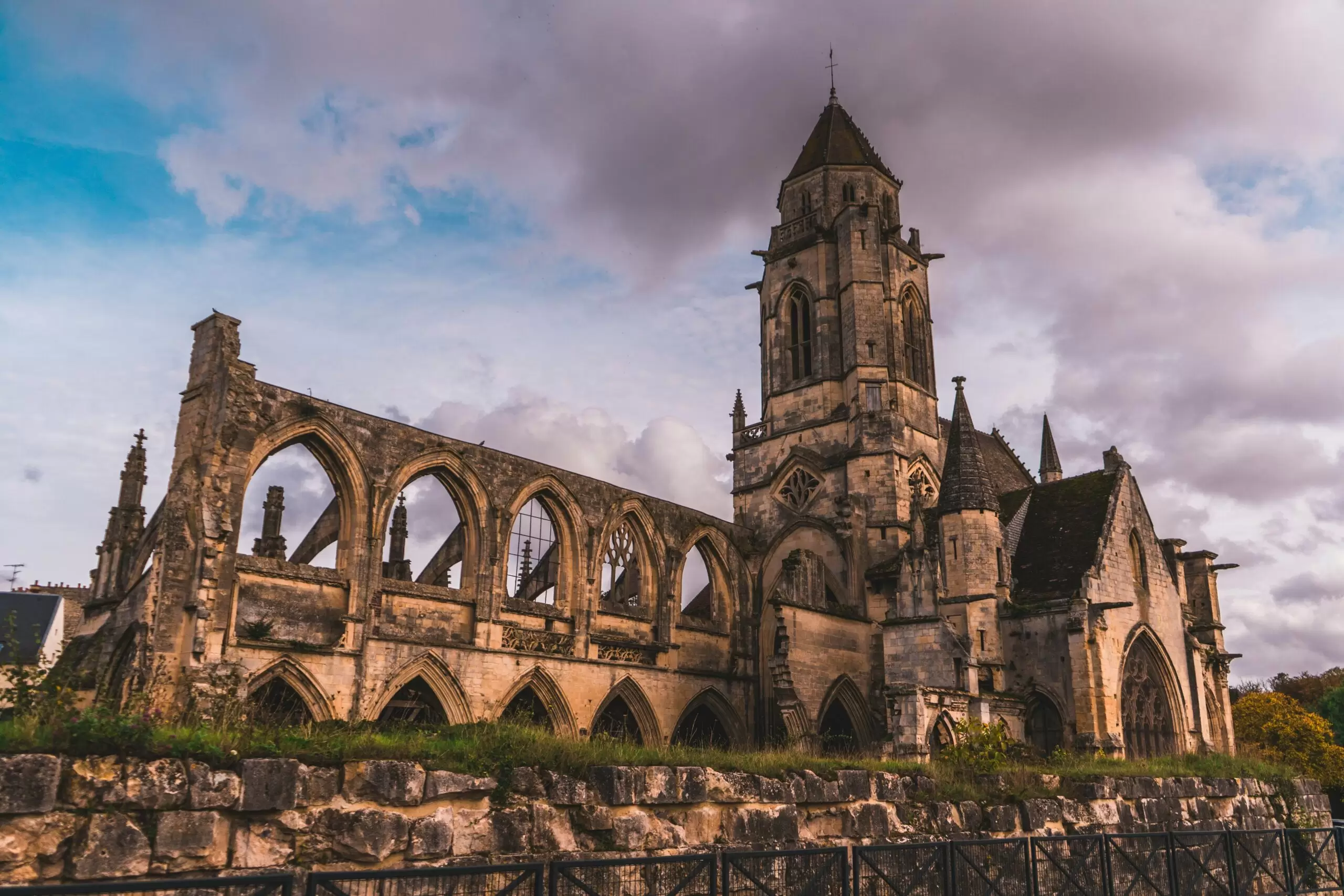
In Caen, the capital city of the Calvados department, you can take a tour of the remnants of William the Conqueror’s chateau as well as his tomb, in the impressive Abbaye aux Hommes monastery. For lovers of Romanesque architecture, this medieval structure is one of the most important examples in Normandy. It was built in 1063, just three years before the Battle of Hastings. Caen is also home to an impressive and impactful WWII museum, which should not be missed, even if you choose a battlefield-free itinerary.
In Rouen, the capital of the Seine-Maritime department and also the capital of the entire region of Normandy, one can find traces of numerous other historical figures. Visit the soaring cathedral of Rouen to see the final resting place of Rollo, the first viking king of the Normans, as well as the tomb of the heart of Richard I, better known as Richard the Lionheart. On the medieval Place du Vieux-Marché is where Joan of Arc was burned at the stake in 1431. You can now visit the church that marks the spot, the Church of St Joan of Arc.
Take time to wander the well-preserved streets in the historical core of the city to view the fine examples of Norman half-timber and other notable medieval architecture. Rouen is also flush with art and culture as numerous museums reflect. Don’t miss the Musée des Beaux-Arts de Rouen founded by Napoleon Bonaparte, with collections of paintings from Monet and Renoir (among other famous Impressionists). The city also has a notable culinary scene, with cuisine spanning the globe and a professional cooking school that also offers English-speaking short courses for those wanting to improve their cooking skills during their travels!
Did you know that Normandy was the birthplace of the Impressionist movement? Just 1 hour from Paris is Giverny, home to Monet’s famous house and gardens and the place where he was inspired to paint his iconic waterlilies (and other notable works). Guided tours are available year-round but the best time to visit is between July and August when the lilies bloom.
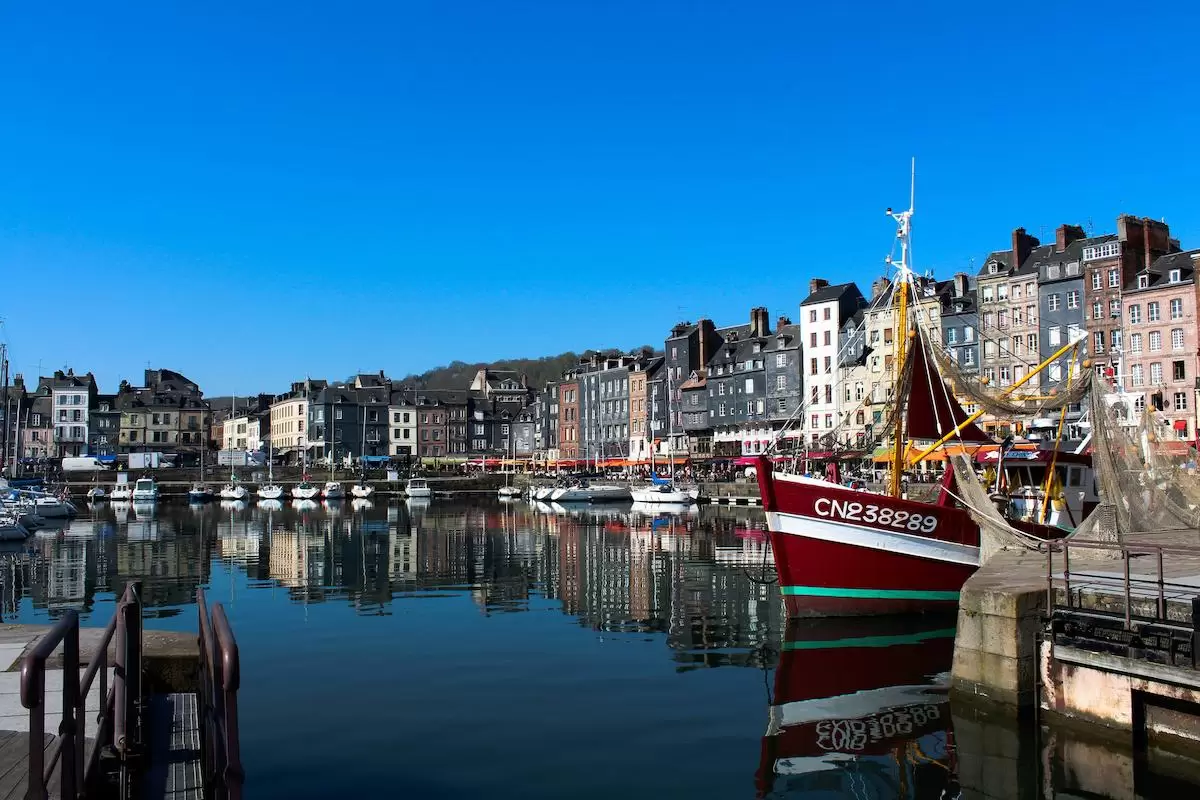
Also, just 1 hour and 30 minutes northwest of Giverny, is the gem of a town, Honfleur. An historic port-town in its own right, full of maritime history spanning a thousand years, it was also considered the epicenter of the impressionist era and routinely visited by Monet and his mentor Boudin. At the Ferme Saint Siméon, they along with many of their contemporaries, would come together to set up their easels, interpret the landscape and reflect on their efforts over a cup of coffee and calvados. Ferme Saint Siméon has been a hotel for over 200 years and it’s still possible to book a stay there, take in the same views as the artists themselves and even take a private painting class on the hotel grounds with a professional art instructor.
Honfleur has a beautiful, compact core with narrow cobbled lanes, perfect for slow-strolling. Peek inside the incredible church of Sainte-Catherine, built by shipbuilders with a unique roof that looks like the upside down hull of a ship. In fact, it is the largest wooden construction church in France. On Saturdays, especially from May to September, the church and adjoining square are the epicenter of a bustling local market. Continue wandering and you’ll discover the old harbor. This was a very important shipping port during the middle ages and is now a living postcard, with tall merchant houses and lively cafes.
No visit to Normandy is complete without sampling the most famous food and drink. To start, the coastline is renowned for oysters and shellfish. The coastal road from Honfleur southwest towards Cherbourg is dotted with oyster farms, most of which sell directly to consumers from roadside stands or seaside markets. When in season, from July to January, mussels are on every menu and a local favorite. While you can certainly enjoy a glass of crisp white wine from Nantes or the nearby Loire Valley, Normandy isn’t wine country. Instead, there’s a golden and effervescent alternative, cider.
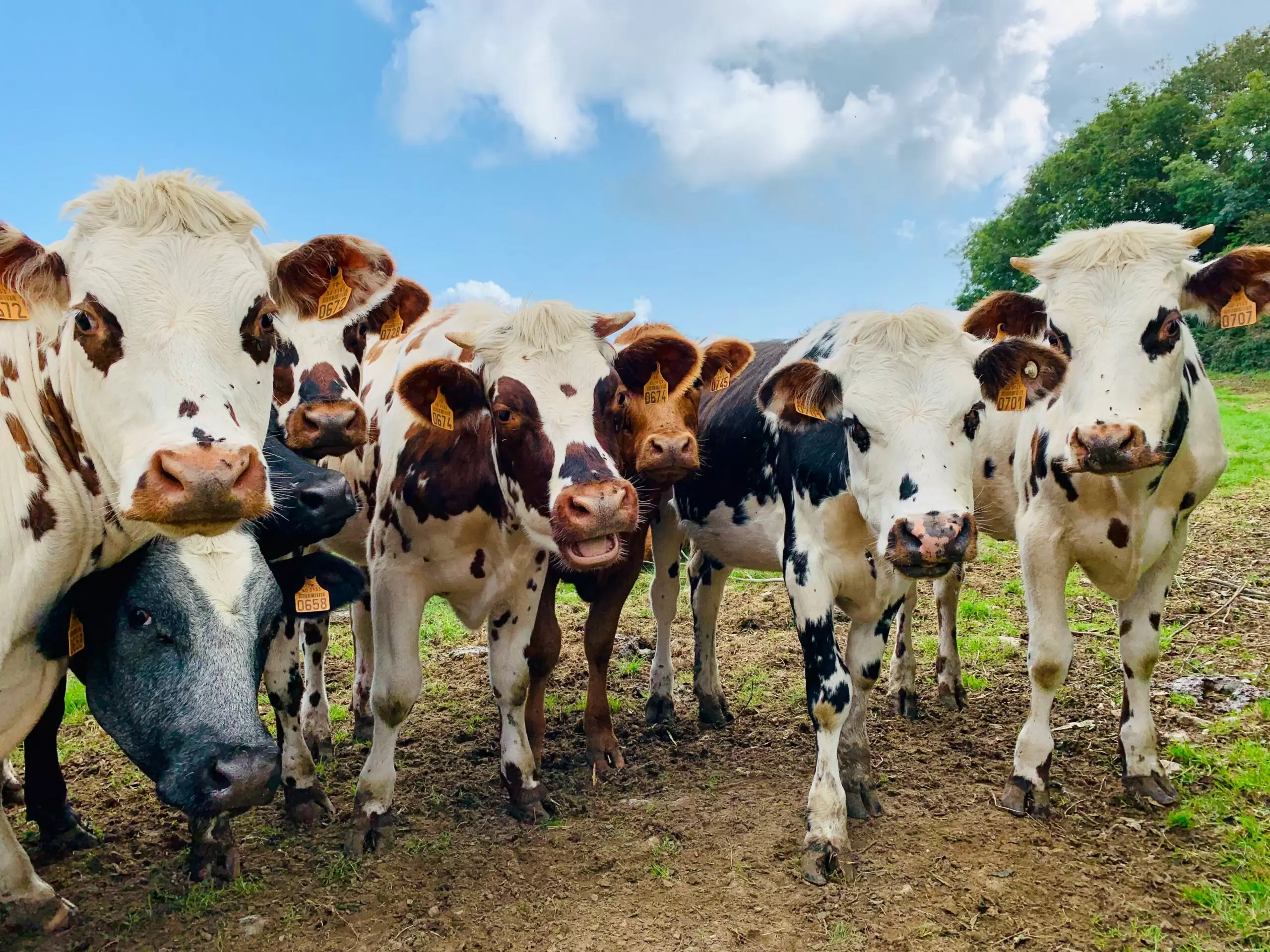
Our travel consultants can help you plan a day out among the orchards, tasting the region’s famous cider and calvados (the local apple brandy). For cheese lovers, there is a lovely itinerary linking local producers of the famous Camembert, Livarot and Pont l’Eveque cheeses. Let’s not forget the glorious yellow butter and rich creme produced by beautiful piebald cows with their distinctive brown “goggles”, who graze on the rich green grass nourished by plentiful rain and pure air.
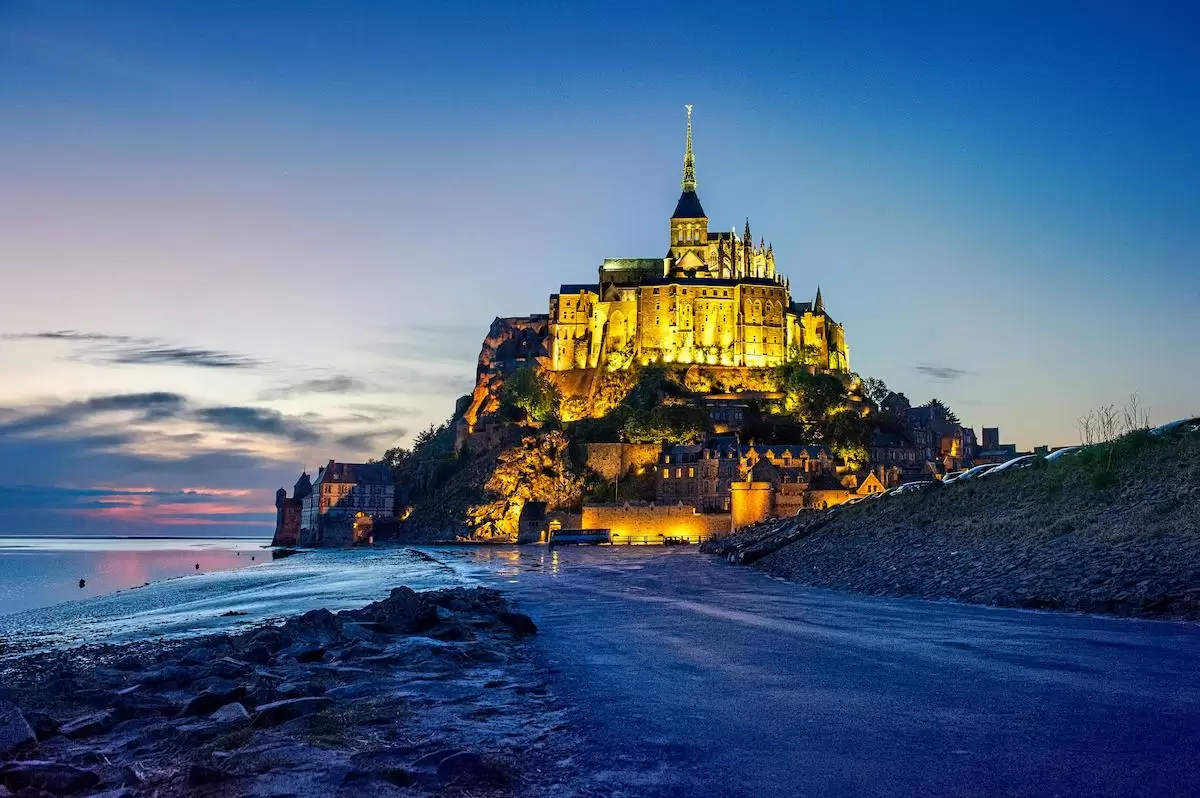
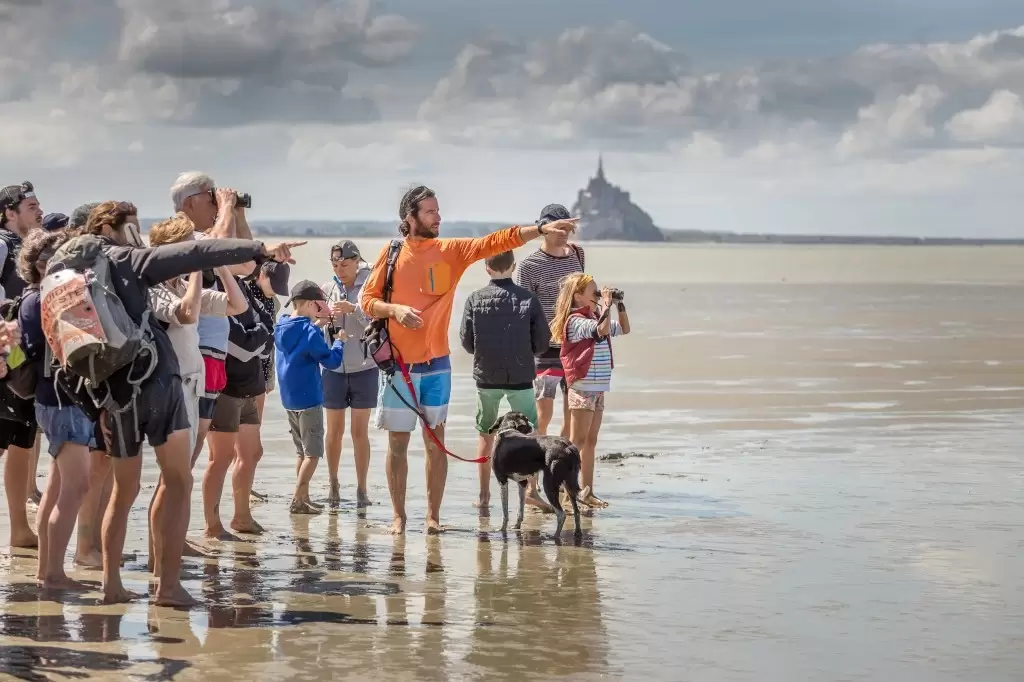
Any first visit to Normandy must include a visit to the legendary Mont-Saint-Michel. This UNESCO monument, whose construction began in the early 8th century, seems to float between the sea and sky. The small island is inhabited by a small village, with houses and cafes and shops and topped by an impressive abbey. Take plenty of time to explore the abbey church and cloister and take in the sweeping views of the bay from the west terrace. If you are lucky, you might catch the legendary tides that legend says can travel faster than a galloping horse! The tides in the Bay of Mont-Saint-Michel are the highest in Europe, with the sea retreating up to 15 kilometers (9.3 miles) from the coast at low tide.
If you wish to follow in the footsteps of more than a millenia of pilgrims before you and make a traverse on foot from the mainland to the island or simply explore the landscape around Mont-Saint-Michel, there are specifically trained and licensed professional guides who have a deep understanding of the complicated nature of the tides. It is highly recommended to be accompanied by a guide, who can also share with you the vast and varied history of the monument but also share interesting knowledge about the deep connection between locals and the flora and fauna of the Bay.
Normandy is such an iconic region in France but also a diverse one, offering endless possibilities for adventure. You can spend your entire itinerary along the charming coastline and another in the rich heartland, or plan a trip that combines them both. Whether you are a scholar of medieval history or interested in the arts, wishing to pay respects to military heroes or wanting to sample distinctive culinary specialties, the Normandy region never fails to deliver an unforgettable journey. Come visit as a stand-alone destination or combine it with a long weekend in Paris. With the network of high-speed trains expanding in France and across major cities in the EU and Switzerland, it’s easier than ever to link Normandy with another destination on your must-visit list. We invite you to check our other blogs highlighting some of our favorites cities in France.