
Brittany: A Mysterious Land with the Celtic Connection
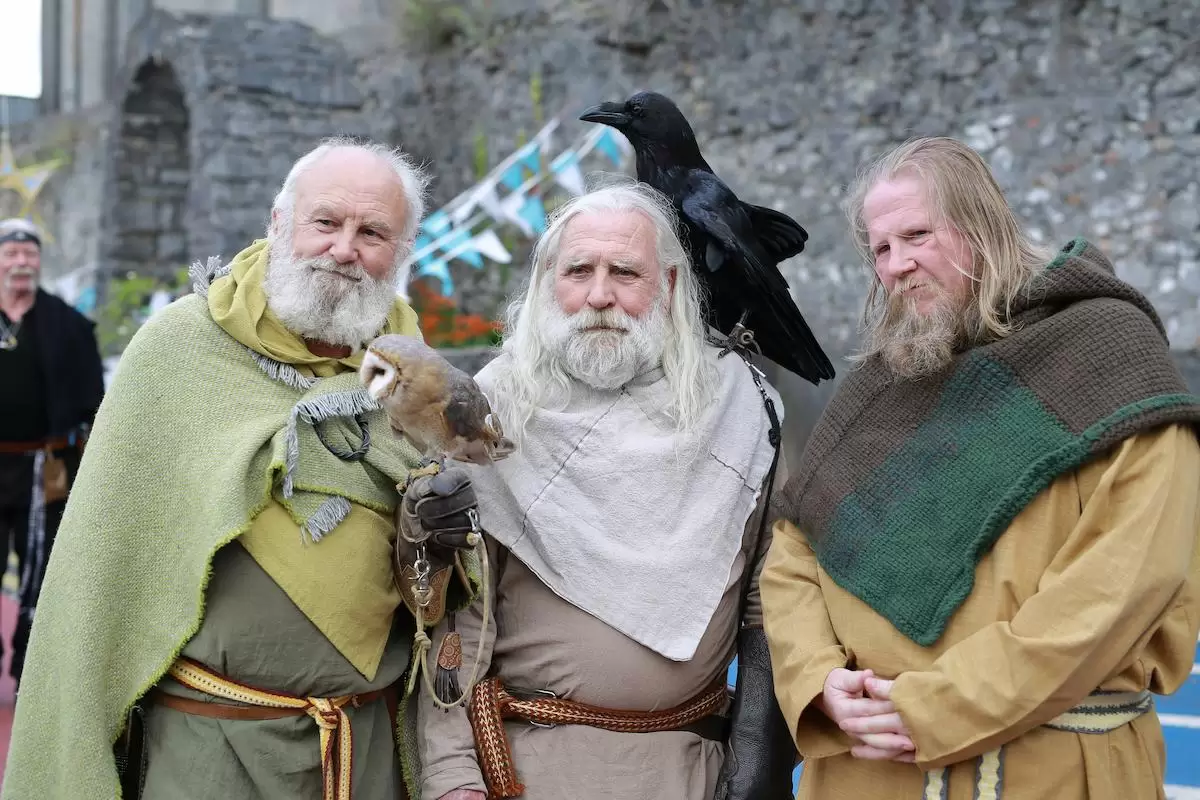
Degemer mat! Welcome to Brittany! Why not start your adventure by learning a word or two of the rare and beautiful Breton dialect. Did you know that the Bretons are related to the Celtic people and share a similar language? Brittany, or Bretagne in French, is a land of deep mystery, unique customs and friendly people. And like its neighbor Normandy, the region of Brittany is vast and varied. There are wild coastlines hiding secret coves and sheltering native plants found nowhere else in France. Inland, there are vast fields, yielding crops of buckwheat (to make the famous regional galettes) as well as deep forests of ancient trees. And most surprisingly, there are mountains, perfect for adventure seeking hikers and cyclists alike. Come and discover with us ancient sights, distinctive sounds and one-of-a-kind flavors of the proud and iconic region of Brittany.
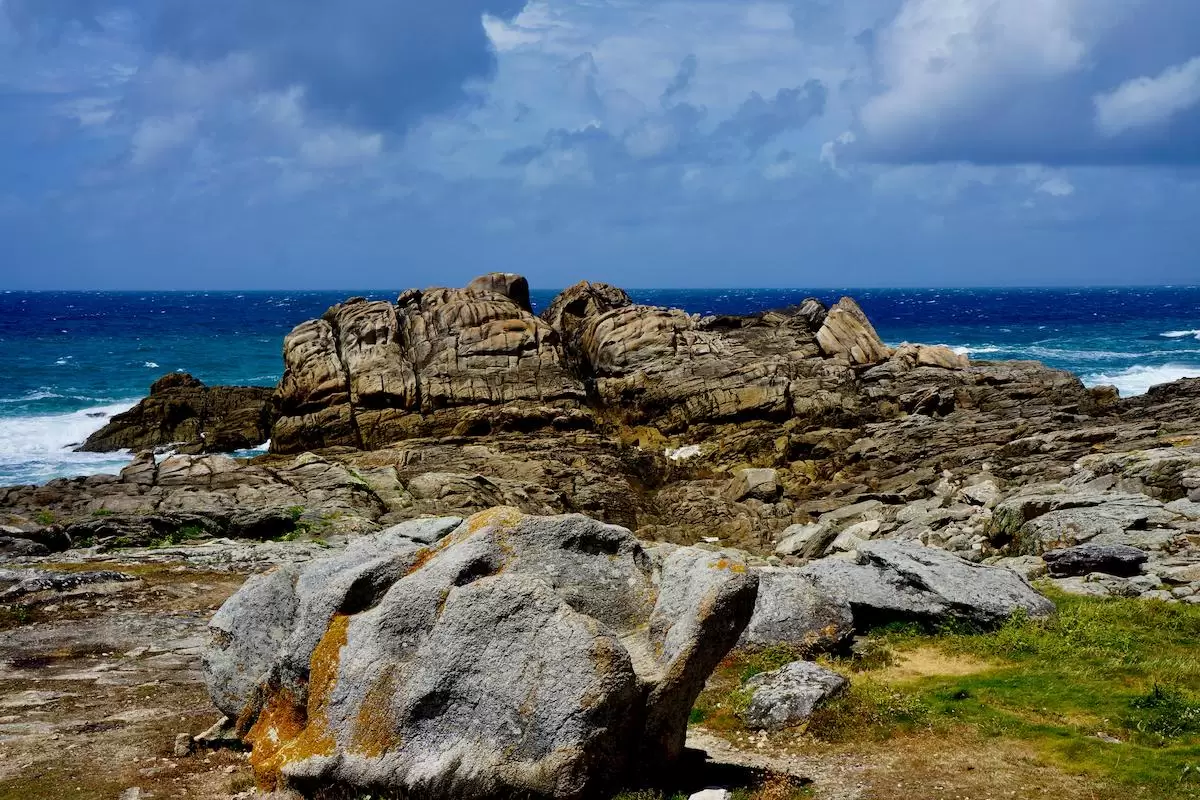
The best place to begin your Brittany holiday, especially if you are combining it with a few days in Normandy, is the department of Ille-et-Vilaine. Here you have an option of three fine cities as a home base, each with an individual personality and vibe: Saint-Malo, Cancale or Dinard. Arriving into Saint-Malo is easy thanks to a well-connected train station serving other main cities in Brittany, Normandy and of course Paris. If you wish to fly, choose Rennes Airport, which is only an hour away from Saint-Malo by car or train.
There are two distinct parts of town, the “intra muros” or historic “old town” sitting snugly inside the ramparts or the “extra muros”, those neighborhoods surrounding the port and the ocean-facing boardwalk. There are some charming hotels nearby and dozens of restaurants specializing in the local seafood (try the scallops when in season), Breton dishes (don’t miss Kig Ha Farz if you have a big appetite) and even one specializing in famous Brittany butter. After a fine meal, you can walk the bustling cobbled streets of the city or take in the ocean views from atop the ancient walls.
If seaside luxury is more your style, start your journey in the sleek resort town of Dinard. Sitting along the Côte d’Émeraude across a wide bay from Saint-Malo, Dinard is a popular destination for the French and has had some famous residents throughout its long and eventful history like Picasso, Churchill and Oscar Wilde. It can easily be reached from Saint-Malo by car, train or even ferry, a fun and highly scenic way to travel.
This vibrant town is known as the “Cannes of the North” thanks to numerous cinema and arts events, including the British and Irish film festival in early October and the Francofile film festival each July, both drawing locals and glamorous internationals alike. Nearby communities also offer visitors a chance to play golf on an award-winning course or spend a day surfing. Naturally, such a prestigious resort is the perfect place to simply relax on the beach or in the spa of some of the finest hotels in the region.
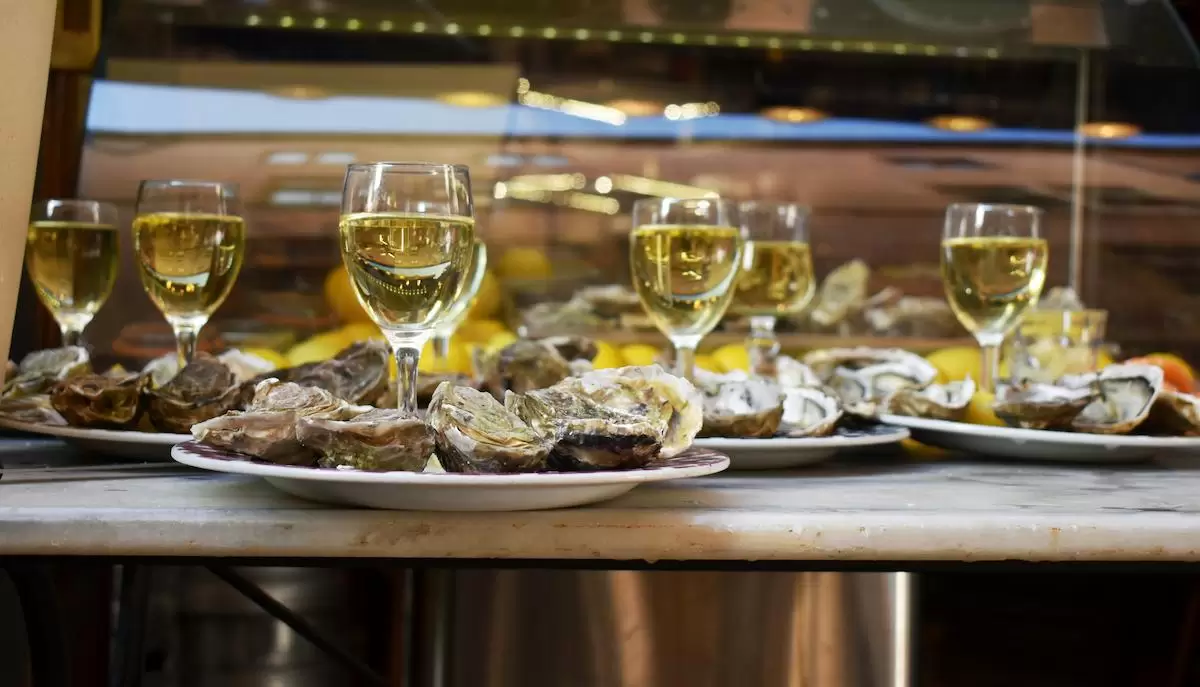
For oyster lovers or those looking for a simpler, more serene start to their holiday, choose the charming small city of Cancale. Here, you can hike along the rugged coastline to the daily oyster market and sit down with your toes in the water to indulge in a dozen (or more) oysters raised right before your eyes. If you would like to learn more about how this delicacy is raised, take a guided tour of the oyster beds with a local farmer. You can top it off with a sweet-ending by joining a crepe cooking class with our favorite local pastry chef, Mary-Margaret. Cancale is the perfect choice to avoid the summer crowds and while simple but cozy hotels are the norm, there is the fabulous Chateaux Richeux and 3-star Michelin fine dining restaurant Le Coquille just a few minutes down the coastline. It is worth the splurge for a special and unforgettable occasion.
Further westward is the department of Finistère, with two main cities: Quimper and Brest. In Latin, the name means “end of the earth” but in the Breton language it actually means “the beginning” of the earth, a curious viewpoint that gives a little insight into how the locals see their world. Brest is a major city, the third most populated in Brittany behind Rennes and Nantes and while it suffered heavy damage during World War II and has been largely rebuilt in a modern, industrial style, it is worth a visit for a notable aquarium, a botanic garden specializing in endangered species and of course its namesake pastry: the Paris-Brest, named after a famous bicycle event that is so gruelling it only takes place every four years. The dessert is said to have enough calories to fuel a bicycle racer for the length of the course, over 1200 kilometers! It’s so emblematic that there’s a competition held in Paris every year and winning is a highlight of any French pastry chef’s career.
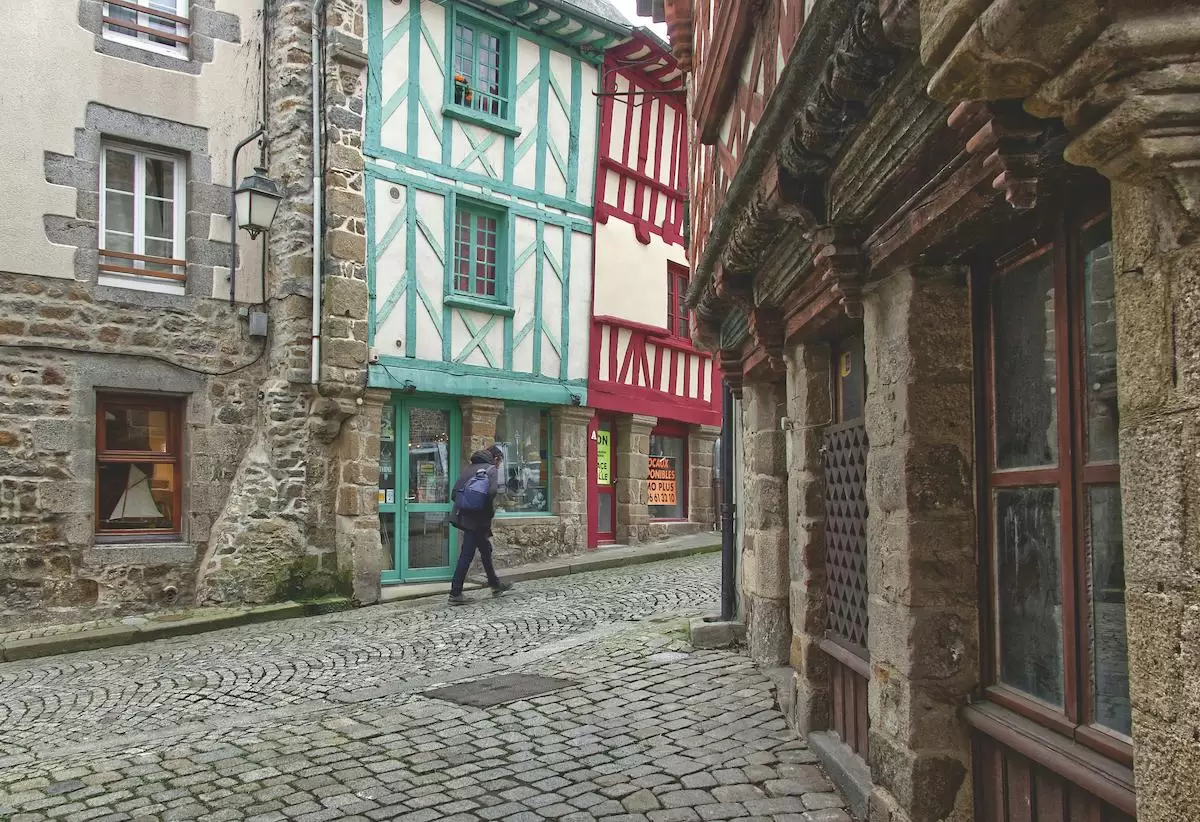
For a more intimate and authentic city visit, head to Quimper, easy reached by car or train. Quimper means “confluence” in the local language and is an ancient city that was valued for its location spanning three navigable rivers. Today, it boasts an attractive old quarter with rustic bridges and half-timbered architecture and is the perfect place to engage in traditional Breton culture, including costumes and music, not seen or heard anywhere else in France.
The best place to experience this is during the Cornouaille Festival, held the third week of July. It’s a very important event that started locally in the 1920’s and has grown to some renown, especially in the Celtic-speaking world. Don’t miss an opportunity to attend one of the many concerts throughout the week of celebrations. And while you are there, pay a visit to the famous faience pottery museum, part of Quimper’s outstanding heritage. Quimper has a TGV line running directly from Paris as well as links to Rennes, Nantes and Vannes.
Want to explore Paris? Check out our blog on spending 3 spontaneous days in Paris!
For an escape from the city bustle, opt for an adventure into the heart of Finistère. You might not have expected to find substantial mountains and deep forests full of mystery; and according to local legend also a bit of magic. The village of Huelgoat is one of our favorite places to discover all of these natural wonders and is a great choice for hiking or mountain biking or enjoying the quiet of a cozy local bed and breakfast. The boulder-strewn woods here are splendid for some curious walks, with placenames like “trembling rock”, Arthur’s Cave and Fairies’ Pool. Huelgoat is also an excellent choice for families travelling with children, as many of the trails and activities are kid-friendly.
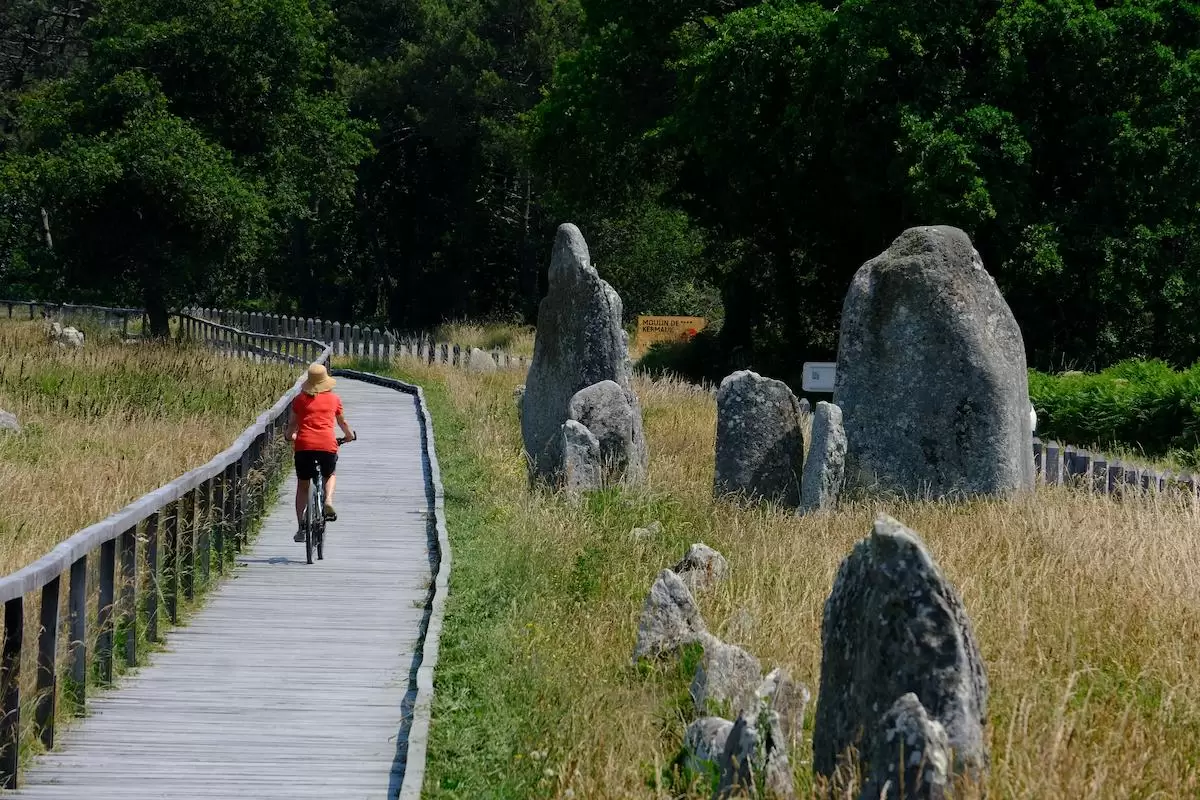
Further south is a department called Morbihan which is home to the lovely town of Vannes but also the enigmatic Carnac. As in other parts of Brittany, this area is full of neolithic and mesolithic standing stones (menhirs) and burial chambers (dolmens) and none more famous than the Carnac stone rows of Ménec, Kermario and Kerlescan. At least a full day should be devoted to exploring these alignments on your own or with a private historian-guide who can share with you the insight into the stones themselves as well as the people who placed them.
Vannes makes an ideal stop as you make your way through the southern half of Brittany. A compact yet photogenic historical center is full of well-kept half-timbered buildings housing local artisans and interesting shops. The picturesque harbor is usually full of sailboats and other small craft and is a popular place for locals to stroll after a mid-day or evening meal. For a town founded by the Celts over two-thousand years ago, Vannes is now a popular and polished holiday destination for Parisians yet remains relatively undiscovered by masses of English-speaking tourists. It has historically been and remains a town for sea-fearing people. A notable exception was the monk named Émilion, a baker by trade, who left Vannes to establish an hermitage in a rock shelter in the woods east of Bordeaux. This would eventually become Saint-Émilion, a destination for world class wines. Interested in learning more about Bordeaux area vineyards and travel tips for the region? Check out our France Travel Guide.
Last but certainly not least are the cities of Rennes and Nantes. These two capitals of their respective regions make great bookends to any Brittany itinerary. Rennes, located in the north of the region, is a progressively modern city with two historic “old towns”. In the early 18th century, a fire ravaged the core of the city. The wealthier northern half was rebuilt in fine stone while the poorer southern half was left to its residents to reconstruct with any materials they could salvage. The result, even in modern times, is distinct. Most of the notable monuments and listed buildings are in the northern half, including Brittany’s Parliamentary buildings, a fine beaux-arts museum with works by Picasso and Saint-Pierre cathedral.
Nantes, a large metropolitan of over a million inhabitants, is not actually a part of modern Brittany…at least in the eyes of the French government. This is rather controversial and is the cause for the occasional peaceful political movement to restore Nantes as a cultural and historical part of the Region. Residents of Nantes still consider themselves to be Breton. Nantes is nevertheless a capital city, that of the Loire-Atlantic department and is very well connected to other major cities in Brittany, the rest of France and greater Europe by road, rail and sky. A large airport offers European and International flights year-round.
As you can see, Brittany is a region full of surprises. You could spend your entire visit never losing sight of the sea or you can choose to explore the mysterious heartlands, where traditions are an important part of everyday life. It makes a natural companion to a visit to nearby Normandy, or easily combine it with your Switzerland vacation. From Celtic culture, to hiking among monoliths or sampling decadent pastries after a day at the beach, there is enough adventure to return again and again. Here’s another bit of Breton to practice before your trip: Bec’h dei! Let’s go! Start your vacation to France by visiting our site specializing in custom made itineraries.