
Living Tuscany in Pistoia: One Day in an Authentic Italian Town.
Each return to Tuscany brings new discoveries. This autumn, my collection was enriched by a small town with a big soul – Pistoia. We ended up here by chance, it’s not as famous as Florence or Siena, but that is exactly what makes it special. Want to embark on this italian adventure? Let our travel consultants craft your personalized itinerary.
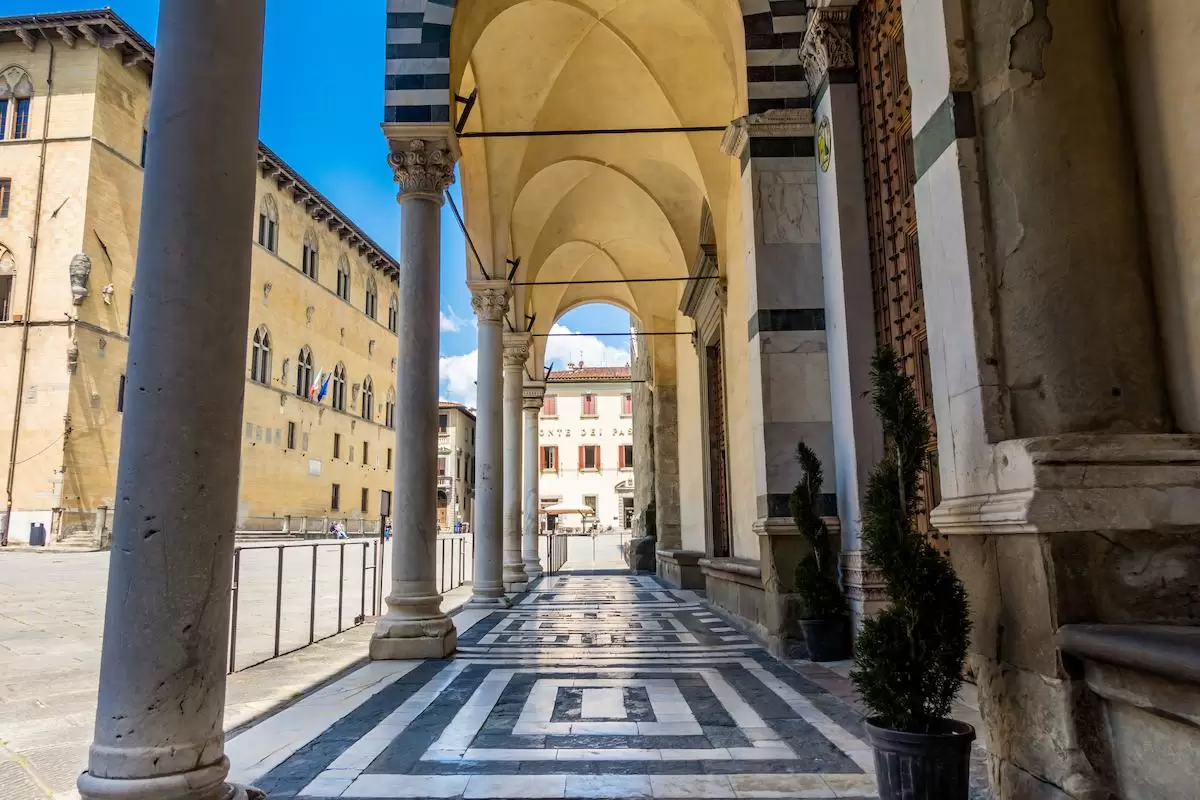
In mid-summer, Pistoia pulses with energy – Pistoia Blues Festival transforms the cobbled streets into open air stages, drawing music lovers from all over the world. Yet the true essence of Pistoia is best savored in quieter months, when the rhythm slows, and the city invites you to wander at your own pace, offering the traveler the experience of an unhurried journey.
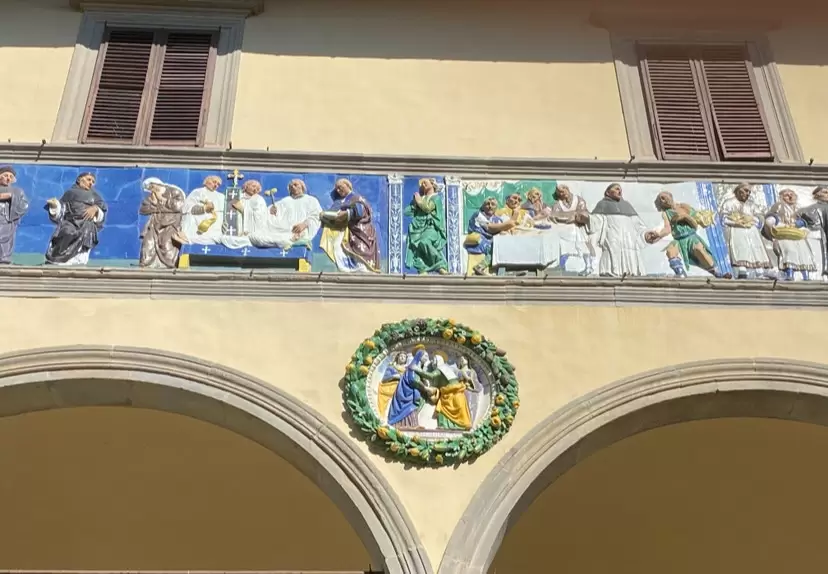
Called “the city of stone” and “the city of beautiful churches,” Pistoia reveals why as soon as you step into Piazza del Duomo. The Cathedral of San Zeno rises, flanked by its baptistery and historic palaces. Just a little further, like a burst of color among the restrained facades, appears the frieze of the Della Robbia Family: glazed terracottas gleam, enlivening the architecture and filling it with lightness.
Atmosphere beyond time and borders
In Pistoia, historical heritage intertwines with the warmth of authentic Tuscany, creating an atmosphere where you can slip into the past while savoring the leisurely present. Sitting at a café table, you feel less like a traveler and more like a local: watching families gather together, neighbors pause to greet one another, and children run joyfully between tables.
On our first morning, we found ourselves in a place crowded with locals on the central square, where, by sheer luck, a single table opened up. We were delighted by our luck and only later realized we had unknowingly joined a family celebration – a baby’s christening. The revelation came only at the end, when the festivity wound down and all the guests, as if guided by an invisible signal, rose at once, embracing, exchanging long farewells, hugs and words. Pigeons and sparrows fluttering to the tables added their chirping to the cheerful hum of Italian relatives.
The culinary scene of Pistoia
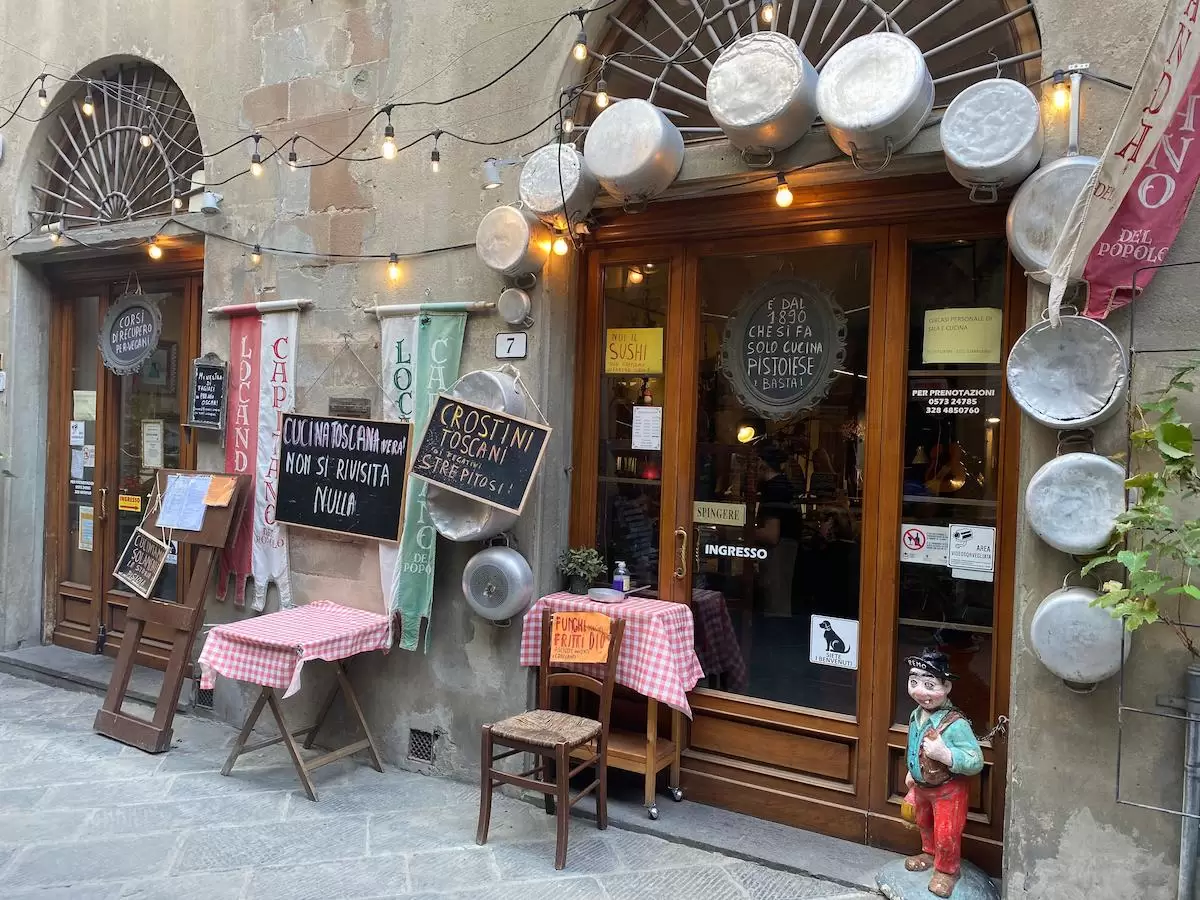
In the cozy trattorias and osterias of Pistoia, dishes are served according to ancient recipes passed down through generations. The local cuisine is deeply rooted in Tuscany’s cucina povera (poor kitchen): chestnuts, beans, and simple soups. Here you can savor ribollita, a thick soup of vegetables and bread; enjoy pappardelle, a wide pasta with sauce, and indulge in castagnaccio, a rustic chestnut flour cake with nuts, raisins, and rosemary. These dishes may be simple, yet it is precisely in this simplicity that the art of Tuscan cooking lies, turning modest ingredients into pure delight.
Pistoia also sits just a short distance from the vineyards of Montalbano, making it an ideal starting point for wine tours. In its cozy enotecas, you can taste wines from small family producers or head straight to the wineries for a more immersive experience. A glass of light, fruity Chianti Montalbano pairs beautifully with local appetizers, carrying with it the breeze of the surrounding hills. And the sweetness of amber colored Vin Santo, dense and golden like a sunset, finds its perfect match in crunchy cantucci.
Museum without walls
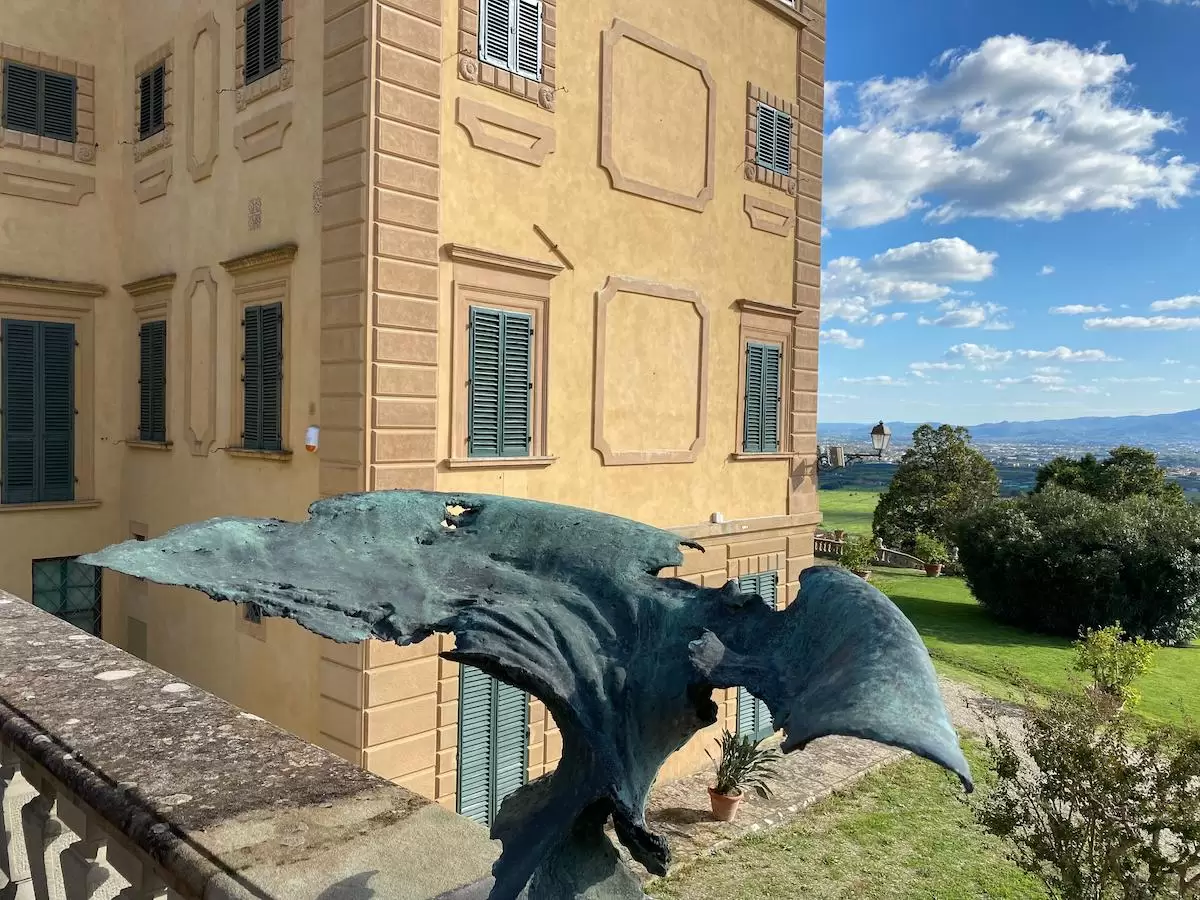
After the meal, we found ourselves in the surroundings of Pistoia, where the contemporary art park Fattoria di Celle stretches out. The park belongs to an old villa, acquired in the 1970’s by collector Giuliano Gori, and today it stands as a symbol of how contemporary art can exist outside galleries and museums. Here, the works are not simply displayed on the grounds but are organically woven into the landscape. The guiding principle is clear: don’t change nature for the sake of art, but let the artwork live in dialogue with it.
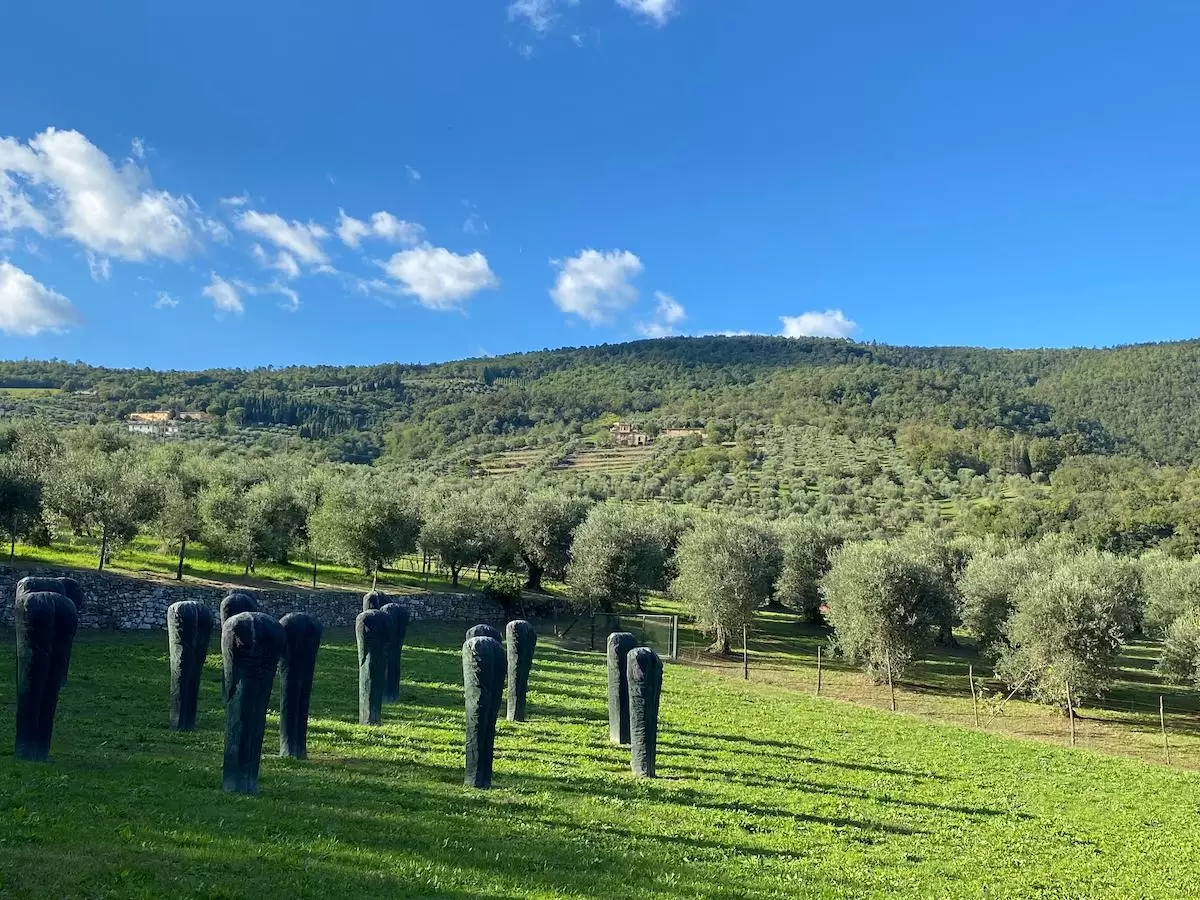
Every path leads to an unexpected encounter, and a walk through the park turns into a journey through ideas and forms. We walked along a trail and suddenly came upon Robert Morris’s labyrinth, a reminder that every step is part of our path. On the lake, Marta Pan’s installation floated gently, shifting with the play of water and light, a metaphor for the balance between constraint and freedom. Elsewhere, Daniel Buren played with space and light, while Sol LeWitt left us with a riddle – a cube without a cube. Here, the walk becomes a meditation, and everything around us seemed to acquire a deeper meaning.
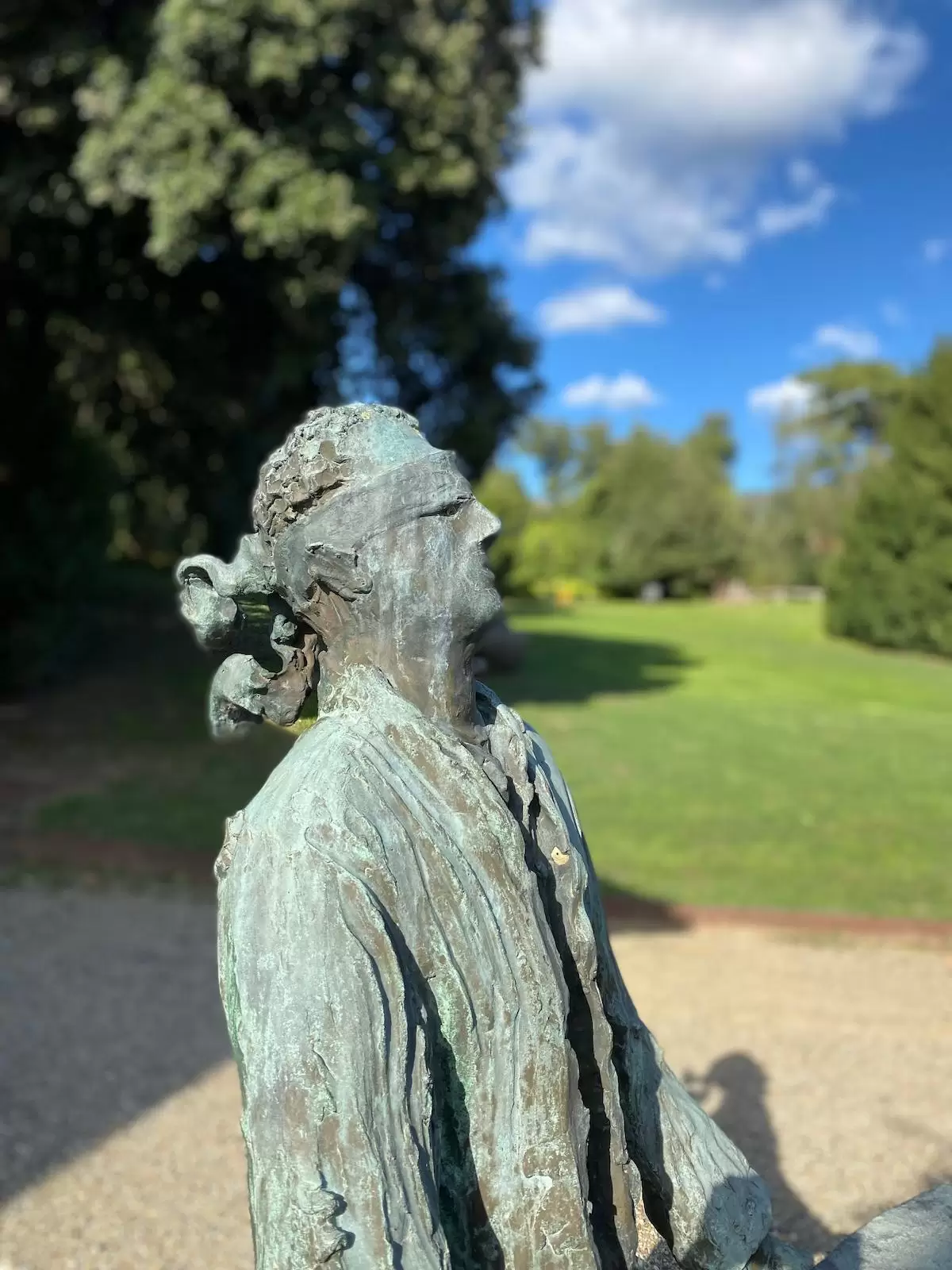
Vintage trains
If you’re a fan of vintage trains, Pistoia, Italy is the place where history comes alive right on the tracks. The depot preserves rare examples from the early 20th century – symbols of Italy’s industrial heritage. Ponderous steam locomotives, the smell of coal and metal – all this turns a museum visit into a true journey through time, when the road beat steadily beneath the wheels and clouds of steam accompanied every trip.
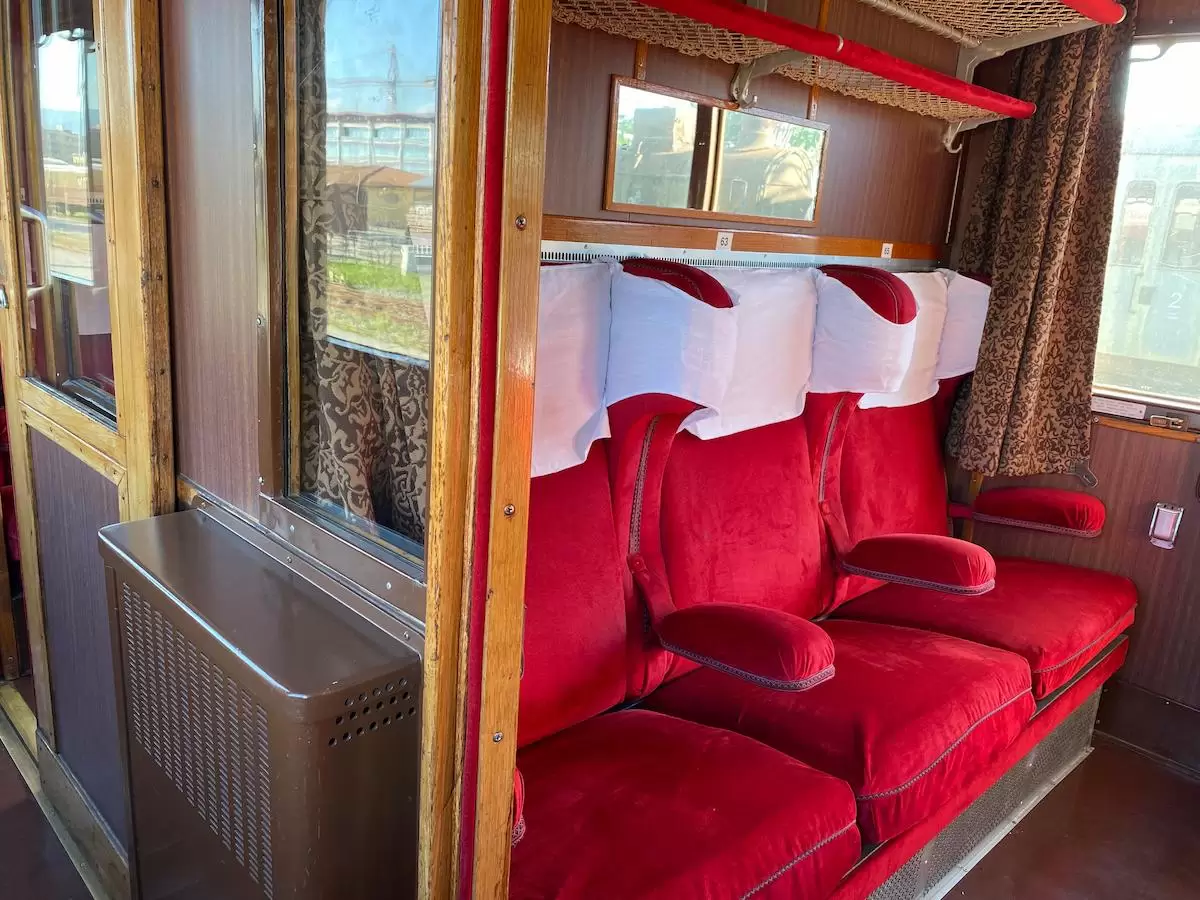
Welcoming Palazzo
As dusk was falling, we were returning to our hotel near Piazza del Duomo, when suddenly the imposing silhouette of its historic palazzo rose before us. Palazzo Puccini is far more than a hotel; it is a home, making you feel like a guest of an aristocratic family. Crossing the massive doors of the Palazzo was like slipping into the pages of an 18th century novel. Lofty ceilings, frescoes and the grand staircase seemed to whisper of the city’s noble past.
The rooms here are not simply accommodations, but chapters in a story. In one, a ceiling painted with grotesques, in another, furniture that seems inherited from a grandmother. My own room was spacious, with antique furnishings and windows opening onto a quiet street. The coolness of stone walls and the embrace of a soft blanket made sleep effortless, as though the palazzo itself was protecting the sleep of its guests.
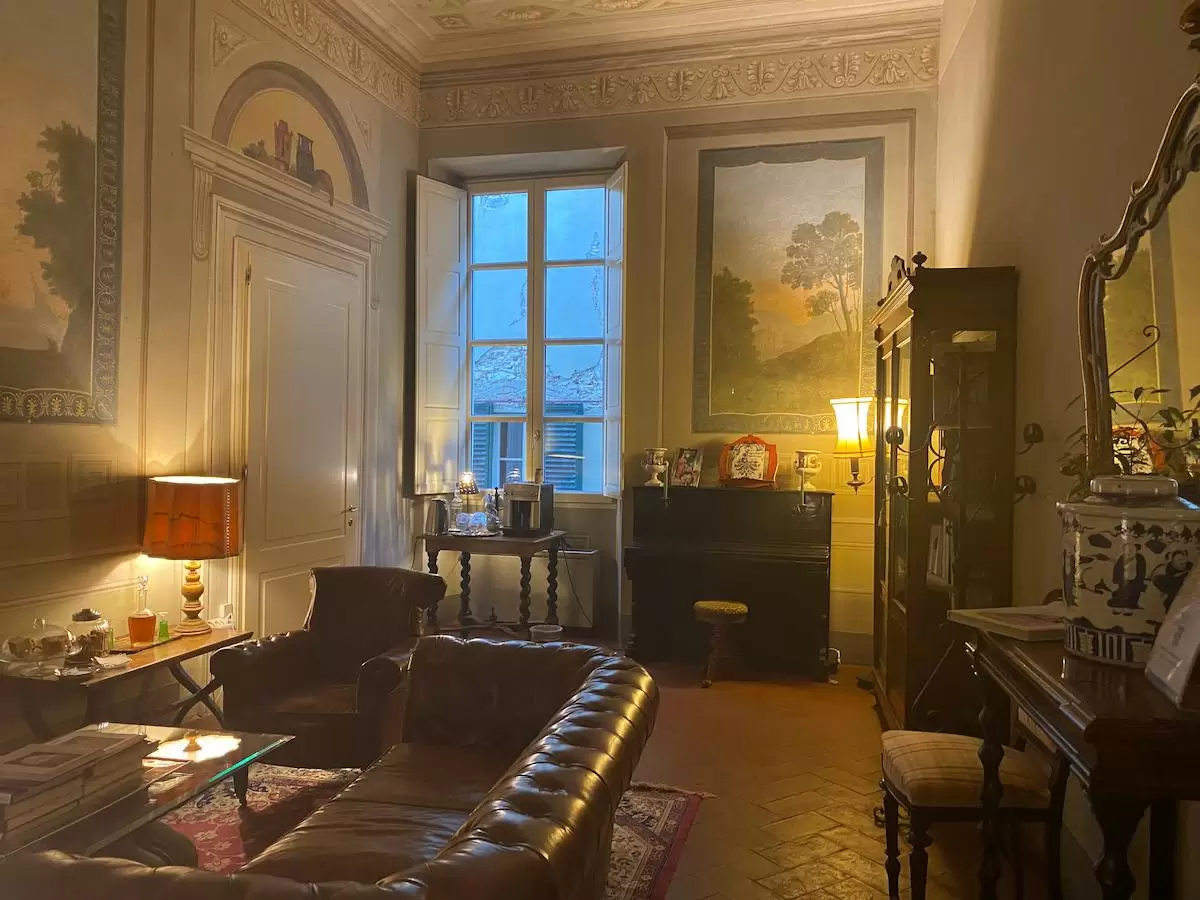
We were sitting with a glass of wine in the cozy lounge, warmed by the cracking firespace and listening as the city drifted into sleep, while Palazzo Puccini revealed its unique character. Through the windows came the occasional footsteps of passersby, while inside the soft glow of lamps reflected in antique mirrors, and shadows playing across painted walls.
The morning began leisurely. In the breakfast hall, sunlight filtered through the shutters onto embroidered tablecloths. Baskets of cornetti, fresh bread, pastries, local cheeses, thick honey, and homemade jams awaited us. Nearby – porcelain cups for fragrant coffee. Enjoying a cappuccino, we watched the city awaken: the bells of Piazza del Duomo reached us, greeting the day.
Pistoia: A Perfect One‑Day Destination
Thanks to its excellent transport connections, Pistoia is easy to reach for a one day visit from Tuscany’s iconic cities. It’s easy to weave into an itinerary alongside its more famous neighbors: driving from Lucca takes just 36 minutes, while Pisa or Florence are about 50 minutes away. By train from Florence’s Santa Maria Novella station, you’ll reach Pistoia in only 40 minutes – and step straight into the heart of the city. This convenient journey lets you pair Pistoia’s intimate charm with the highlight landmarks of nearby destinations, making Pistoia a convenient addition to any Tuscan itinerary. With so many things to see, our team can help you find the perfect spots for your next Tuscan experience, combining comfort with discovery.